Physical Education for Homeschoolers: Equipping the Whole Child
When parents choose to homeschool, they take on the beautiful responsibility of nurturing the whole child—mind, body, and spirit. While subjects like math, reading, and science often take center stage, physical education courses for home educators is a vital part of a well-rounded homeschool curriculum.
Why Physical Education Matters in Homeschooling
Some may view P.E. as optional or merely recreational, but Scripture reminds us that our bodies are temples of the Holy Spirit (1 Corinthians 6:19–20). Caring for our physical health is part of honoring God. A strong, active body supports a sharp mind and joyful spirit—and it’s just as important to a child’s development as academic success.
Critics of home education often point to physical education as something parents can’t adequately provide. But the truth is, homeschool families are fully equipped—by God and by creativity—to meet this need at home. In fact, many public school programs fall short, despite access to expensive equipment and professional instructors. These programs may fail to address poor fitness, unhealthy eating habits, and negative peer experiences.
The Homeschool Advantage: Customizing P.E. for Your Child
One of the great strengths of homeschooling is the ability to personalize education. Physical education courses for home educators is no exception. Parents know their children’s strengths, weaknesses, and temperaments better than anyone. This insight allows them to tailor physical activity in a way that builds confidence rather than anxiety.
For example, a child who struggles with coordination or self-esteem may dread traditional gym class. At home, that same child can be encouraged, supported, and given time to grow—free from teasing or humiliation. A parent can emphasize health, effort, and good habits over athletic performance or peer comparison.
Easy and Effective Physical Education Ideas for Home
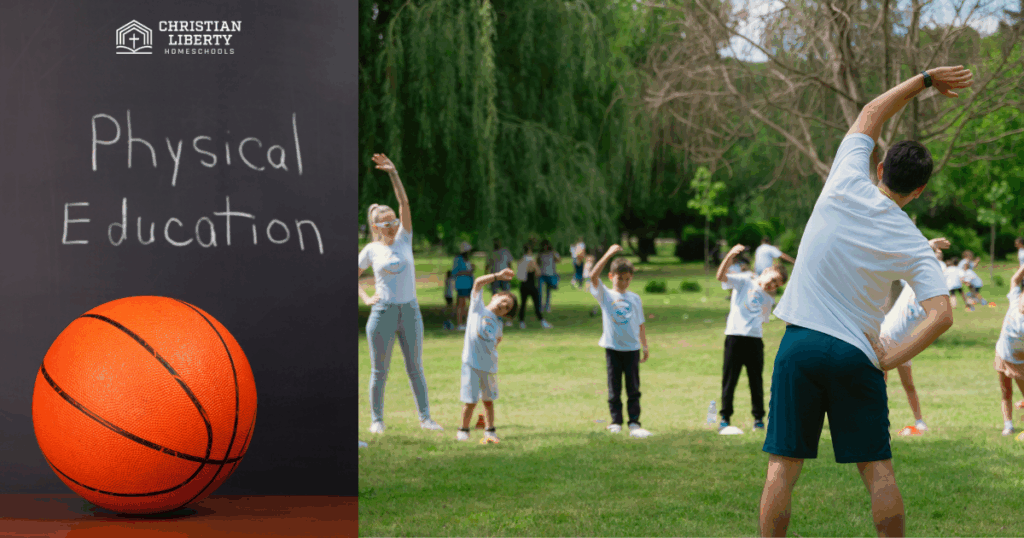
You don’t need a gymnasium to teach P.E. at home. Many effective and enjoyable activities require little to no equipment. Here are just a few ideas:
- Jumping rope – Excellent cardio and coordination
- Playing catch – Great for hand-eye coordination and motor skills
- Relay races or tag – Fun ways to build endurance and teamwork
- Nature walks – Combine exercise with science and worship of the Creator
- Household chores – Physical activity with real-life value
- Family sports – Bike rides, swimming, tennis, hiking, or aerobics
These activities build healthy bodies and promote godly character traits like discipline, perseverance, and teamwork.
Sports Opportunities Outside the Home
Families looking for more structured or competitive physical education can explore local programs such as:
- Park District leagues
- YMCA classes
- Faith-based sports ministries or homeschool co-ops
Many churches also offer sports camps and family-friendly exercise opportunities rooted in Christian values.
Encouragement for Christian Homeschool Parents
Don’t let the fear of teaching physical education discourage you from homeschooling. With a little creativity and a lot of love, you can help your child grow strong in body, wise in mind, and faithful in heart.
Homeschooling offers the freedom to nurture physical health in a positive, faith-filled environment—something that many traditional schools can’t provide.
Final Thoughts
At Christian Liberty Homeschools, we believe in supporting families as they raise children for God’s glory—in every subject and season of life. Physical education is more than a class—it’s a lifelong lesson in stewardship, discipline, and joy.
Looking for more support? Explore our full K–12 homeschool curriculum designed to help you teach with confidence and Christ-centered purpose.
The content of this blog was taken from the script of a broadcast written by Dr. Paul D. Lindstrom for his “There’s No Place Like Home” radio broadcast and edited for CLH blog publication by Nancy Kramer.